Tailor Gnome: A Designer’s Real-World Embroidery Review
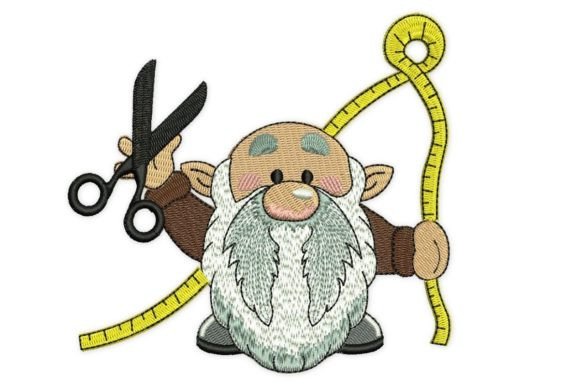
As a designer who’s stitched hundreds of embroidery files for client projects, Etsy shops, and boutique merchandise, I opened Tailor Gnome expecting charm—but what stood out immediately was its quiet confidence. It’s not flashy or over-engineered. Instead, it balances whimsy with clean structure: a gnome in a tiny tailor’s coat, measuring tape draped over one shoulder, scissors tucked at his belt, and a soft, approachable expression. The pose is upright but relaxed—perfect for center-placement on a tote bag, apron, or baby onesie. It feels handmade without looking amateurish, and elegant without being stiff.
First Impressions That Translate to Real Products
I tested Tailor Gnome on a natural linen tea towel first—no embellishment, just crisp white thread on oat-colored fabric. The design held its shape beautifully. The satin-stitched coat lapel, the subtle fill-stitched hat brim, and the delicate running-stitch details in the measuring tape all read clearly at 3.5 inches tall. There’s no visual clutter, yet nothing feels underdeveloped. That balance is rare. For craft business owners, this means your finished product won’t need heavy photo editing to look polished—it reads well straight off the hoop.
When I resized it slightly for a baby blanket corner (4.2 inches), the proportions stayed harmonious. No squashed features, no lost definition in the face or tools. That tells me the digitizing respects scale—critical if you’re offering multiple size options to customers or prepping printable mockups for your Etsy listings.
Where Tailor Gnome Shines—and Where It Asks for Thoughtful Execution
Tailor Gnome excels on stable, medium-weight fabrics: cotton twill for aprons, fleece-backed sweatshirts, canvas tote bags, and brushed poly-cotton baby blankets. On a heavyweight denim tote, it looked grounded and artisanal—not overwhelmed by texture. On a lightweight chambray shirt? I added a tear-away + cutaway hybrid stabilizer and reduced top tension slightly. The result was crisp, with no puckering around the satin-stitched coat edges.
It’s not ideal for ultra-thin knits (like jersey tees) without significant stabilization and testing—or for heavily textured surfaces like bouclé or thick terry cloth, where fine details like the gnome’s spectacles or stitching lines can blur. On dark fabric, I recommend testing thread colors in both matte and high-sheen polyester—some metallic accents in the original file (if included) may shift tone depending on base color. Always check contrast in black-and-white mockups before finalizing your listing visuals.
Caps and curved hats? Proceed with caution. The design’s vertical orientation and moderate width make it workable on front panels, but avoid stretching it across seams or crowns. For embroidered patches, Tailor Gnome holds up exceptionally well—clean edges, balanced stitch density, and no floating threads when trimmed. I backed it with iron-on adhesive and heat-pressed it onto a denim jacket pocket: it survived two washes with zero fraying.
What This Design Does for Your Brand and Buyers
For Etsy sellers and small shop owners, Tailor Gnome quietly elevates perceived value. It doesn’t scream “cute”—it whispers “thoughtful.” That subtlety builds trust. Customers browsing handmade products respond to intentionality: the careful spacing between the gnome’s hands and the tape, the gentle curve of his hat brim, the way the fill stitch mimics woven texture. These aren’t accidents—they’re signs of skilled digitizing. And that translates directly to higher perceived craftsmanship, better reviews, and repeat buyers.
I used it on a set of personalized kitchen towels for a bridal shower gift—each embroidered with the couple’s initials beneath the gnome. Guests commented not just on the sweetness, but on how “finished” it looked—no loose threads, no shadowing, no distortion. That’s the hallmark of a design that supports professionalism, not undermines it.
Practical Designer Notes Before You Stitch
- Always test on scrap fabric first—especially if pairing with stretchy, napped, or dark textiles.
- Review stitch density before hooping. Dense fill areas (like the hat crown) benefit from proper stabilizer choice—don’t assume light cutaway will suffice on fleece.
- Confirm hoop size compatibility. While Tailor Gnome fits comfortably in a 4x4 hoop at standard size, resizing up for larger apparel may push limits on smaller machines.
- Inspect small details at 200% zoom in your embroidery software: eyelashes, tool handles, and tape markings should be legible—not merged or pixelated.
- Test thread color contrast on both light and dark fabric swatches. White thread on navy works; pale yellow may disappear.
- Use appropriate stabilizer—lightweight cutaway for knits, tear-away for stable wovens, and fusible mesh for patches.
- Verify licensing terms before selling finished items or bundling Tailor Gnome as part of digital embroidery bundles. Commercial use isn’t automatic—even with “high-quality” claims.
Final Thoughts From the Hoop
Tailor Gnome isn’t just another machine embroidery design—it’s a versatile, trustworthy asset for creative entrepreneurs. It fits naturally into holiday embroidery (think gnome-themed stockings or ornament pouches), baby embroidery (onesies, burp cloths, milestone blankets), custom apparel (sweatshirt cuffs, pocket accents), and boutique branding (embroidered tags, shop towels, packaging liners). Its personality is warm but never cloying; its construction is precise but never rigid.
If you’re an embroidery designer building a library of reliable design assets—or a craft business owner choosing your next best-selling embroidered patch or tote bag design—Tailor Gnome earns its place. Not because it’s trend-driven, but because it’s thoughtfully built for real-world making: durable, adaptable, and quietly memorable.