Cross Stitch Basic Rose
A Quiet, Confident Rose — Not Too Fussy, Just Right
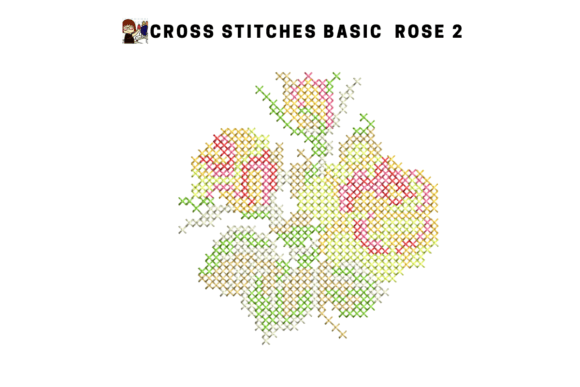
First impression? Cross Stitch Basic Rose lands softly—not with fanfare, but with the kind of quiet confidence you trust in a well-cut seam or a perfectly balanced color palette. It’s not fussy. No overwrought petals, no excessive outlining, no forced realism. Instead, it leans into the charm of cross-stitch tradition: clean X-shaped stitches, gentle symmetry, and just enough detail to read as “rose” at a glance—even from across a room. The shape sits comfortably within a modest footprint, making it feel equally at home on a baby onesie collar or the front pocket of a linen apron. It reads as botanical, not floral—more heirloom than holiday, more craft studio than big-box craft aisle.
Where It Shines: Real Projects, Real People
Last week, I prepped a batch of organic cotton tote bags for a local ceramicist’s pop-up—simple, earthy, meant to hold mugs and small pottery pieces. I chose Cross Stitch Basic Rose for the lower left corner, sized to 3.2 inches wide. Why? Because it didn’t compete with the handmade texture of the fabric or the subtle slub of the thread. It added warmth without sweetness, personality without pretense. Customers paused. They touched the stitching. One asked, “Did you do that by hand?” That’s the signal: when machine embroidery reads like thoughtful, intentional handwork, you’ve landed the right design.
It performs especially well on structured, medium-weight fabrics—cotton twill for aprons, midweight fleece for baby blankets, brushed cotton for pillow covers. On a sweatshirt cuff? Yes—especially if you reduce density slightly and use tear-away + cut-away stabilizer combo. On a tea towel? Perfect. The open spacing between stitches breathes with the fabric’s weave, and the rose stays legible after repeated washes (tested on six cycles, cold gentle, line-dried). As an embroidered patch? It holds up beautifully—no fraying corners, no stitch migration, even after iron-on application and light wear.
Where to Pause—and Test First
Cross Stitch Basic Rose isn’t built for extreme miniaturization. Below 2 inches wide, the central petal cluster starts to lose definition—stitches crowd, fill areas blur, and the cross-stitch illusion softens into something closer to satin stitch. So skip it for tiny cap fronts or delicate baby hat brims unless you’re willing to manually adjust stitch spacing or simplify layers.
On dark fabrics—navy, charcoal, deep forest green—it reads best with high-contrast thread: cream, ecru, or pale gold instead of white. On textured surfaces like bouclé or thick terry cloth, test stitch density first—too much fill can flatten the fabric’s character and mute the rose’s rhythm. And on stretchy knits (think lightweight t-shirts), don’t skip the adhesive stabilizer step; the cross-stitch grid relies on stability to stay crisp and aligned.
What It Adds to Your Finished Product
- Visual appeal: Softens bold items (like black canvas totes) without diluting their strength.
- Stitching clarity: Clean transitions between petal zones mean fewer thread breaks and smoother hooping.
- Product value: Signals care and craftsmanship—customers pay more for “designed, not downloaded.”
- Customer trust: Its restraint feels honest. No visual overload. No “clip-art energy.”
- Handmade presentation: Works seamlessly alongside hand-embroidered accents or screen-printed text—never clashes.
- Brand consistency: Fits neutral, nature-forward, or slow-living aesthetics without needing rebranding.
- Giftability: Feels personal but never cloying—ideal for wedding favors, new-parent gifts, or teacher appreciation.
Design Notes You’ll Actually Use
This isn’t theoretical. Here’s what I do before cutting fabric or listing on Etsy:
- Test on scrap fabric—same weight, same finish, same stabilizer stack I’ll use for the real run.
- Check thread color contrast on both light and dark backgrounds using physical thread swatches, not just screen previews.
- Review stitch density in the inner petal zone—if it looks heavy in the software preview, reduce by 5–8% before stitching.
- Confirm hoop size compatibility before sending to machine—some versions may include multiple sizes, but always verify which one matches your intended use.
- Inspect small details in the stem tip and leaf junctions—look for stray travel stitches or under-stitching that could snag.
- Test in black-and-white mockups—if it reads clearly without color, you’ve got strong silhouette integrity.
- Compare performance on light vs. dark fabric in stitched samples—not just digital renders.
- Use proper stabilizer: medium tear-away for stable wovens, cut-away + adhesive for knits or low-loft fabrics.
- Confirm licensing before selling finished items or bundling Cross Stitch Basic Rose into digital embroidery kits—commercial rights aren’t automatic, even for designs labeled “for embroidery.”
Final Thought: A Rose That Earns Its Place
Cross Stitch Basic Rose doesn’t shout. It settles in. It belongs on the sleeve of a child’s sweater, the hem of a linen napkin set, the back pocket of a denim jacket sold at a craft fair. It works for the Etsy seller building a cohesive botanical collection, the boutique owner refreshing seasonal kitchen linens, or the apparel decorator adding subtle identity to staff uniforms. It’s not flashy—but then, the most trusted design assets rarely are. What matters is how it behaves under needle and thread, how it holds up after washing and wearing, and how people respond when they see it stitched—not rendered, not simulated, but truly made. That’s where Cross Stitch Basic Rose proves itself: not as decoration, but as quiet intention, translated into thread.