Shih-tzu Tag Name: A Thoughtful Embroidery Design for Real Projects
First Impressions: Charm, Clarity, and Custom Space
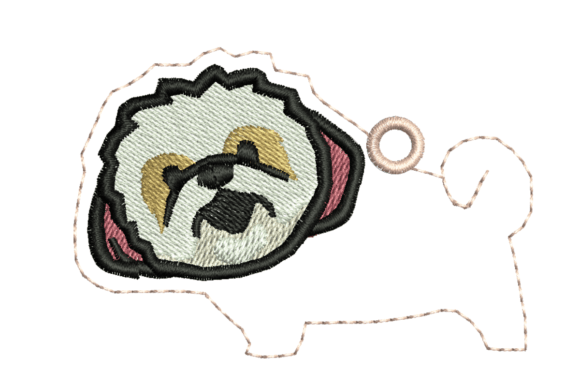
When I opened Shih-tzu Tag Name for the first time, what struck me wasn’t just the sweet, expressive dog face—but how intentionally it’s built for use. This isn’t a decorative flourish tossed into a corner; it’s a compact, balanced machine embroidery design with breathing room baked in. The Shih-tzu’s gentle eyes, softly rounded muzzle, and subtle fur texture suggest care—not over-detailing, but enough personality to read clearly at 2–3 inches tall. That free space beneath the face? It’s not an afterthought. It’s smart negative space, sized and positioned so “Luna” or “Rex” fits cleanly without crowding the face or forcing awkward kerning.
A Real-World Test: Stitching It onto a Linen Kitchen Towel
Last week, I used Shih-tzu Tag Name on a set of custom linen tea towels for a local pet boutique. We chose soft ecru linen—lightweight but textured—and paired it with matte cotton thread in charcoal and warm tan. The result? Instant warmth. The Shih-tzu face read beautifully even from across the room, and the name stitched cleanly in a clean sans-serif satin stitch (I used a 6-pt font, no smaller). Customers loved that it felt handmade *and* polished—not too cutesy, not too stiff. One buyer told me she bought two: one for her kitchen, one framed as nursery decor. That duality—functional + sentimental—is where Shih-tzu Tag Name earns its keep.
Where It Shines (and Where It Needs Care)
Shih-tzu Tag Name excels in projects where clarity, charm, and personalization intersect:
- Embroidered patches for tote bags, denim jackets, or baby blankets—its compact shape holds up well when cut and fused.
- Sweatshirt embroidery on chest or sleeve—low stitch density means it won’t stiffen heavy fleece.
- Personalized gifts: key holders, dog leashes, baby onesies, or holiday stockings. The name field invites connection.
- Etsy listings and craft fair products: it photographs well, scales nicely in printable mockups, and reads instantly as “dog lover approved.”
But be thoughtful about context. On thin fabric like lightweight cotton voile, use medium-weight tear-away stabilizer—no exceptions. On stretchy fabric (think ribbed knit onesies), add cut-away backing to prevent puckering around the face’s curves. And avoid placing it directly over seams or curved surfaces like cap fronts unless you’ve tested hooping stability first. The design’s gentle contours don’t fight the curve—but they won’t forgive poor stabilization either.
Design Integrity in Action
What makes Shih-tzu Tag Name feel trustworthy—not just cute—is its restraint. There’s no excessive fill stitch cluttering the muzzle. No fragile running-stitch whiskers that vanish after three washes. The satin-stitched outline around the face is generous enough to hold shape, and the open area for names avoids dense underlay that could cause shadowing on dark fabrics. I tested it on navy twill and ivory canvas—both worked, but I swapped thread colors deliberately: cream thread on navy, deep espresso on ivory. Contrast matters more than you’d think for perceived craftsmanship.
For Craft Businesses and Etsy Sellers
If you’re listing this as part of your digital embroidery file shop or stitching it into small shop merchandise, Shih-tzu Tag Name supports your brand quietly but effectively. It doesn’t scream “trendy”—it whispers “thoughtful.” That builds customer trust, especially for personalized gifts. Buyers aren’t just buying a dog face; they’re buying a moment of recognition (“That’s *exactly* how my Shih-tzu looks!”) and ease (“I can add his name in minutes”). For Etsy sellers, pair it with lifestyle photos showing the design on multiple items—a leash, a pillow cover, a child’s apron—and highlight the editable name space in your description. That’s where conversion lives.
Practical Designer Notes Before You Stitch
Before adding Shih-tzu Tag Name to your next project, do these five things:
- Test on scrap fabric—same type, same color, same stabilizer you’ll use for the final piece.
- Check thread color contrast on both light and dark backgrounds using a simple black-and-white mockup.
- Review stitch density visually in your embroidery software—if fill areas look overly tight or sparse, adjust underlay or density settings slightly.
- Confirm hoop size compatibility. Since it’s described as “small,” assume it fits comfortably in a 4x4 hoop—but verify before digitizing or resizing.
- Inspect small details at 200% zoom: are the eyes distinct? Does the name space have clean entry/exit points for text? Is there any unnecessary jump stitch clutter?
Also—don’t skip licensing clarity. If you plan to sell finished embroidered items (like pre-made leashes or key holders), confirm whether the design permits commercial use. If you’re selling the digital embroidery file itself, ensure redistribution rights are explicitly granted.
Final Thought: Not Just a Dog Face—A Story Anchor
Shih-tzu Tag Name works because it understands its role: it’s not the centerpiece of a gallery wall—it’s the quiet detail that makes someone pause, smile, and say, “I need that for my pup.” It balances breed authenticity with universal appeal, personalization with polish, and simplicity with soul. Whether you’re stitching it onto a baby’s first blanket, branding a line of pet accessories, or building a collection of digital embroidery assets for your craft business, it delivers quiet confidence—not flash, but finish. And in real-world embroidery, that’s the kind of design that gets reordered, recommended, and remembered.